
Open-source alternative

Outline
The open-source alternative to
 Notion
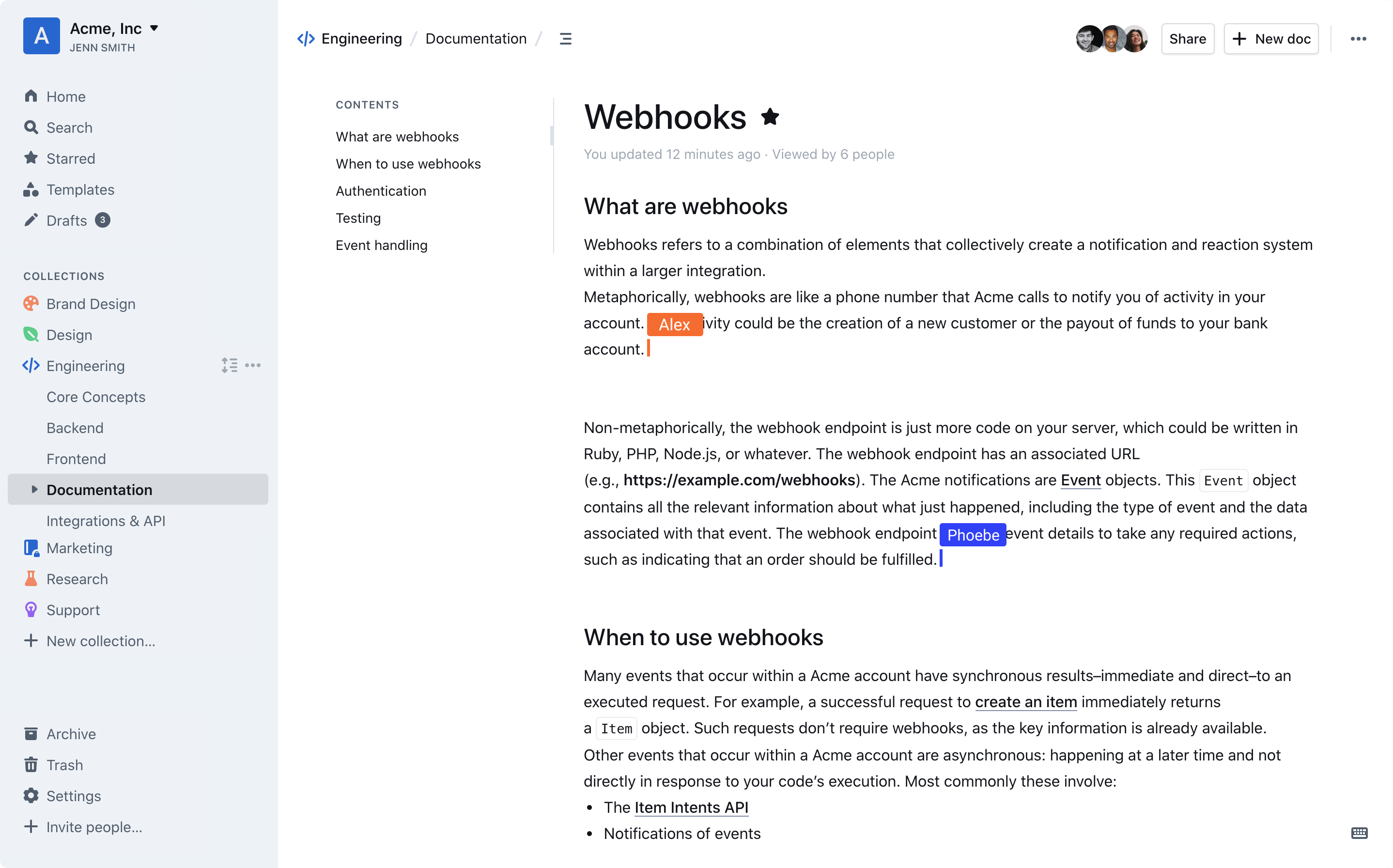
The fastest knowledge base for growing teams. Beautiful, realtime collaborative, feature packed, and markdown compatible.
Replaces / compared to
Health score history
Tracked when GitHub metrics sync. Max one snapshot per 6 hours if unchanged.
+1.3 pts
Latest: 97.3/100 · 41,401 stars
In-depth guide to Outline
Editorial overview for operators and evaluators · 644 words
Outline sits in the growing class of open-source products teams evaluate when they want more control than a fully managed commercial stack such as Notion. Unlike brochure pages that only celebrate features, this guide focuses on the practical questions operators ask before a pilot: licensing posture, language and runtime fit, self-host effort, and whether the community around the repository still looks active. The project is associated with a BSD-3-Clause license in our catalog, which is a starting point for legal review rather than a substitute for reading the full license text and any additional terms published by the maintainers. Its primary language is listed as TypeScript, a detail that influences hiring, security tooling, and how easily your existing SRE or platform team can own the service after launch.
Most organizations do not adopt Outline because open source is fashionable. They adopt it when data residency, customization, predictable cost at scale, or independence from a single vendor roadmap becomes a board-level concern. If your current workflow is built around Notion, treat Outline as a candidate for a controlled migration path: mirror a non-critical workspace first, measure latency and admin overhead, then decide whether a hybrid or full cutover is justified. Our editors rate self-host difficulty at 2 out of 5, which usually means a competent generalist can bring up a test instance without a multi-week platform project. A Docker Compose oriented blueprint is available in our listing, which can shorten the time from evaluation to a disposable sandbox on a single VM or workstation.
Community health is imperfectly measured, yet a few signals still help. GitHub stars and forks describe attention, not quality. Open issues describe workload, not neglect. Release cadence and maintainer response patterns often matter more than any single vanity metric. In our last sync, Outline showed roughly 41,401 stars and 3,678 forks. Open issues were recorded at about 55. A higher count is not automatically bad if triage is active and critical defects close quickly. Our composite health score currently sits near 97.3. That score blends repository activity and related checks so you can sort candidates faster; it is not a certification. Always read the upstream repository and recent commits directly. Metrics on this page can lag, and maintainers sometimes move development to a different default branch or organization.
A disciplined evaluation of Outline usually follows four steps. First, confirm the license and any CLA or enterprise dual-license model matches how you ship software, including internal tools and customer-facing SaaS. Second, validate authentication, backup, and upgrade stories. The best feature set fails if restore drills are unclear or major versions require multi-day downtime. Third, test integration surface area: APIs, webhooks, SSO, and export formats. Migrations die when data cannot leave cleanly. Fourth, estimate total cost of ownership. Cloud subscriptions are visible on an invoice; self-hosting moves cost into people, observability, and incident response. Because Outline is primarily associated with TypeScript, align the pilot with engineers who already operate that stack so review comments stay concrete. Use the Compose-oriented path for the first pilot if your policy allows containers, then graduate to hardened production topology only after functional sign-off.
If Outline looks promising, bookmark this page, star the upstream project only after you have skimmed the README and security policy, and schedule a time-boxed proof of concept with success criteria written down in advance. The project website and documentation should be your source of truth for install steps and supported versions. The public repository remains the best place to inspect issues, pull requests, and release notes before you commit budget. You can also open the proprietary product pages for Notion on this site to compare other open-source options side by side, then shortlist two candidates instead of ten. Finally, involve security and legal early. Open source reduces license fees; it does not remove due diligence. A calm pilot with clear owners beats a rushed production cutover every time.
Questions teams ask about Outline
Screenshots
Pros & cons
Community insights — upvote what resonates.
Pros
No pros yet. Be the first.
Cons
No cons yet. Be the first.
Docker Compose blueprint
services:
  redis:
    image: redis
    ports:
      - "127.0.0.1:6379:6379"
    user: "redis:redis"
  postgres:
    image: postgres
    ports:
      - "127.0.0.1:5432:5432"
    environment:
      POSTGRES_USER: user
      POSTGRES_PASSWORD: pass
      POSTGRES_DB: outline
    user: "postgres:postgres"
Compared to proprietary tools
Related alternatives
AppFlowy
Open-source alternative to
Notion
AppFlowy is a free, self-hostable open-source alternative to Notion. Bring projects, wikis, and teams together with AI....
AFFiNE
Open-source alternative to
Notion
AFFiNE combines docs, whiteboards, and databases in a local-first open-source workspace.
Discussion
Share experience self-hosting or comparing tools. Be respectful.
No comments yet. Be the first to share.